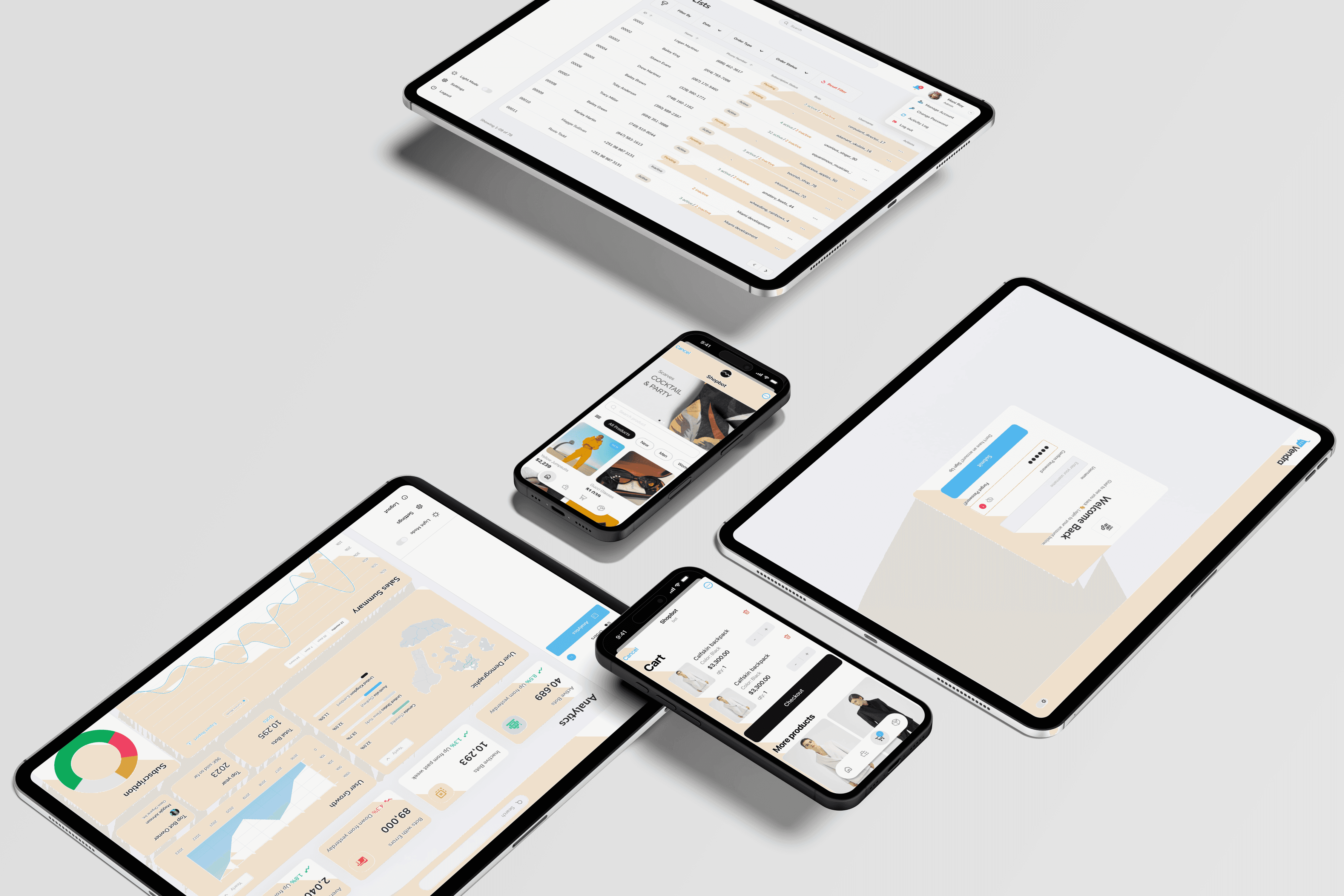
Vendra
Building a commerce experience for small businesses inside Telegram because for many entrepreneurs, Instagram DMs and WhatsApp chats aren’t enough, and setting up a full website is too much.
Date
August 18, 2025
Service
Branding & UI/UX Designer
Client
Aaron
Build in
Figma
The reality of running a small business in Cambodia
A founder approached me with a problem that opened my eyes:
Why do small Cambodian sellers struggle to scale even when demand increases?
In Cambodia, a huge number of micro-entrepreneurs sell through Telegram, Facebook, Messenger, and Instagram. These platforms are where their customers live not traditional websites. But the moment sellers start growing, everything becomes messy:
Tracking orders manually
Confirming payments by sending screenshots
Copy-pasting product descriptions
Losing track of inventory
Mixing personal chats with customer chats
No structure, no analytics, no reliability
On the buyer side, shopping through chat feels chaotic long threads, mixed messages, wrong orders, no clear pricing, slow responses, and scam risk.
The idea behind Vendra:
What if Cambodian sellers could launch a real storefront inside Telegram, with the ease of chat but the power of structured e-commerce?
Solution
To make Vendra simple, fast, and truly useful for Cambodian small business owners, I focused on four core solutions:
1. Clean Storeowner Experience
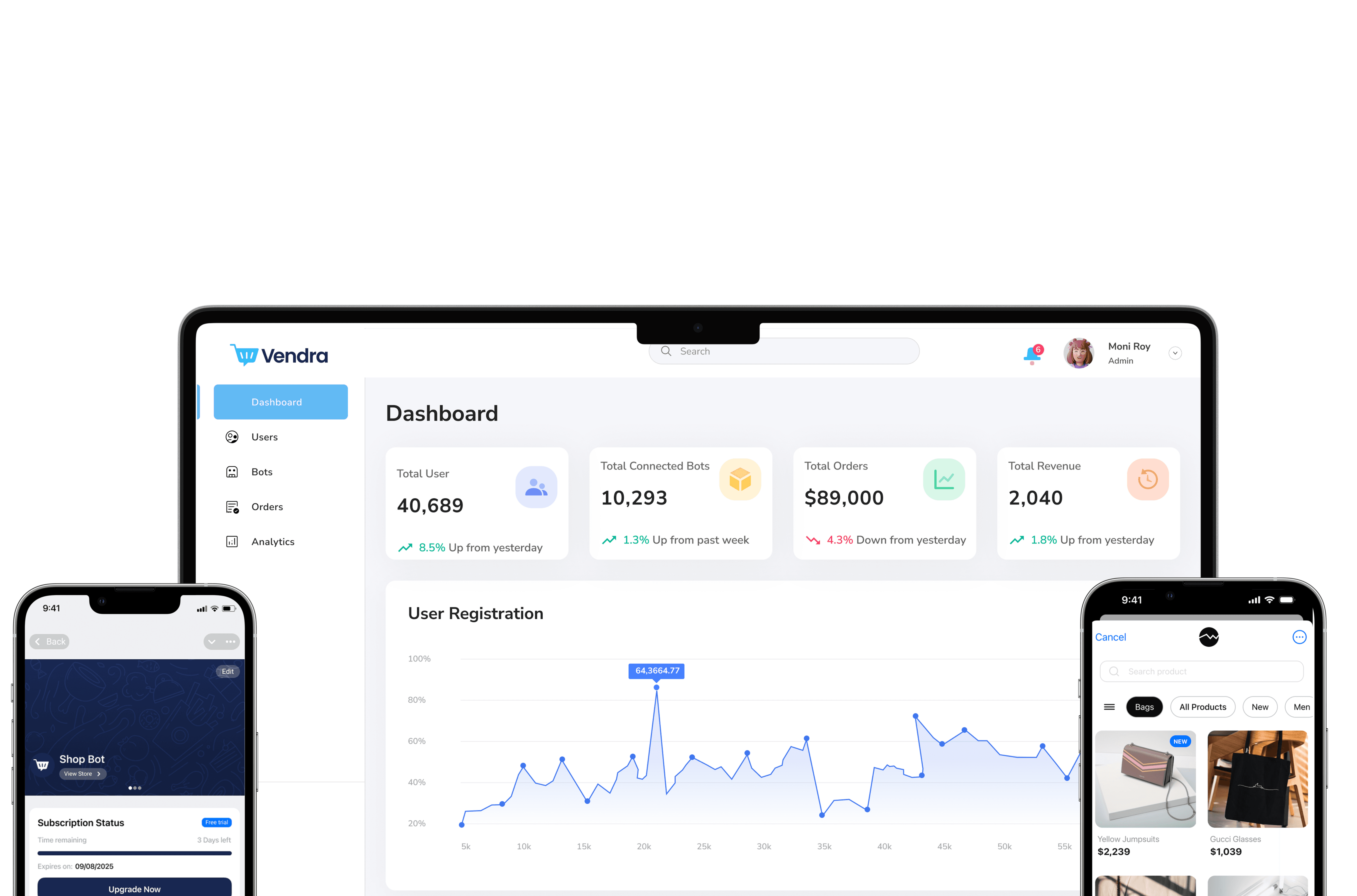
The storeowner mini app was designed around clarity: a homepage showing new orders, low-stock alerts, top products, and revenue insights all using simple cards, icons, and charts that make data easy to understand.
2. Smooth Client Storefront
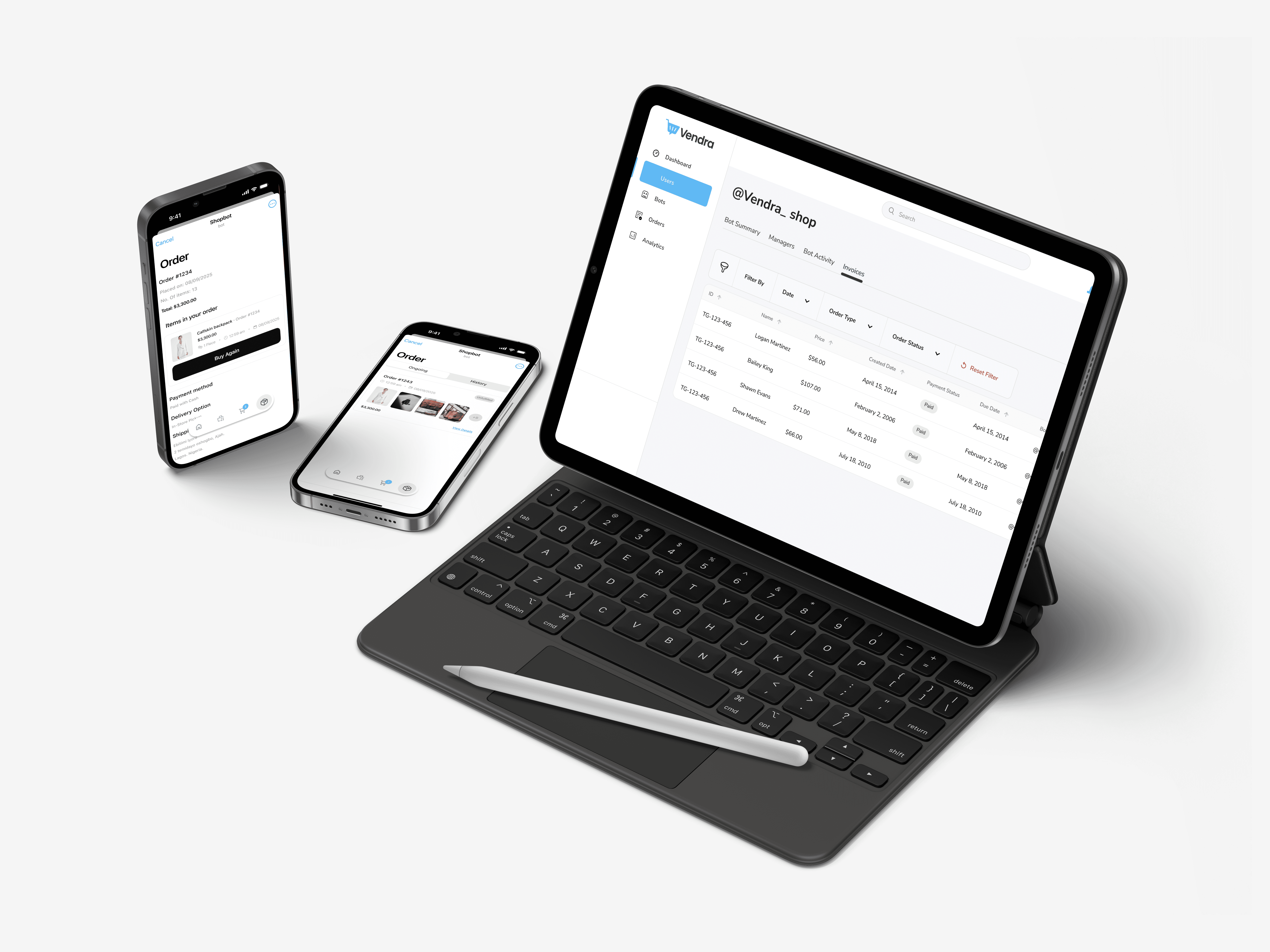
The buyer experience had to feel trustworthy and effortless. I designed a clean storefront with organized categories, simple product cards, quick previews, and a checkout flow optimized for small screens and Telegram’s constraints.
3. Unified Admin Dashboard
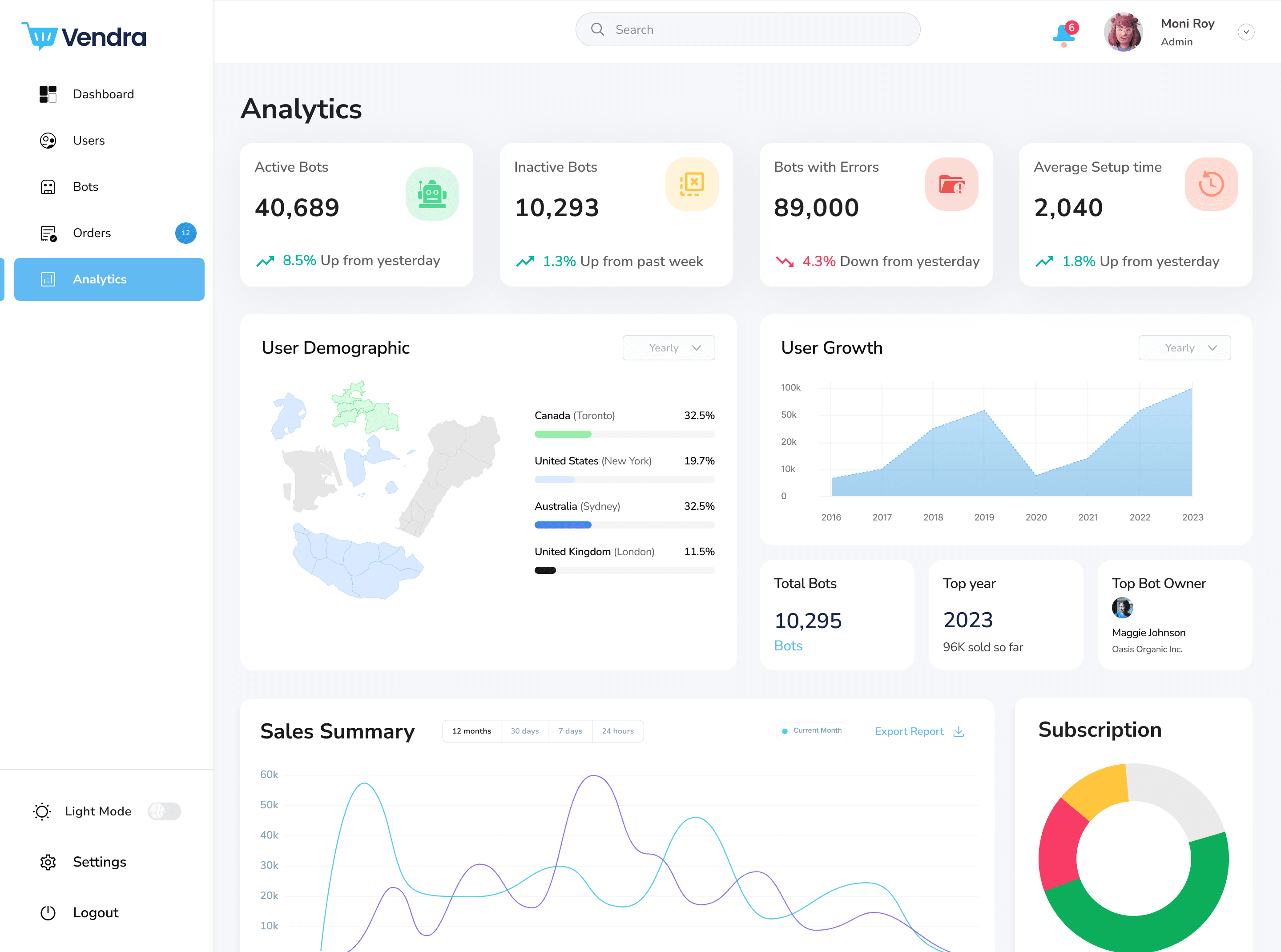
For deeper management, the web dashboard gives sellers clear analytics, product performance, customer behavior, and marketing tools all visually consistent with the mini app through a unified design system.
What I Learned
1. Designing for non-technical audiences requires empathy
Cambodian microbusiness owners aren’t “users” they’re people trying to run a business while handling life.
2. Simplicity is a feature
A mini app inside Telegram demands clarity.
Every step must be obvious.
3. AI is powerful when introduced naturally
AI shouldn’t feel like “technology.”
It should feel like help.
4. Culture shapes UX more than you think
Designing for Cambodian sellers meant understanding local shopping behaviors, trust dynamics, and platform familiarity.
5. A unified design system saves weeks of chaos
It ensured mobile, web, and marketing all stayed consistent and clean.